
Fare evasion: MTA plans to use ‘European model’ of agents asking bus riders if they paid after boarding, Lieber says

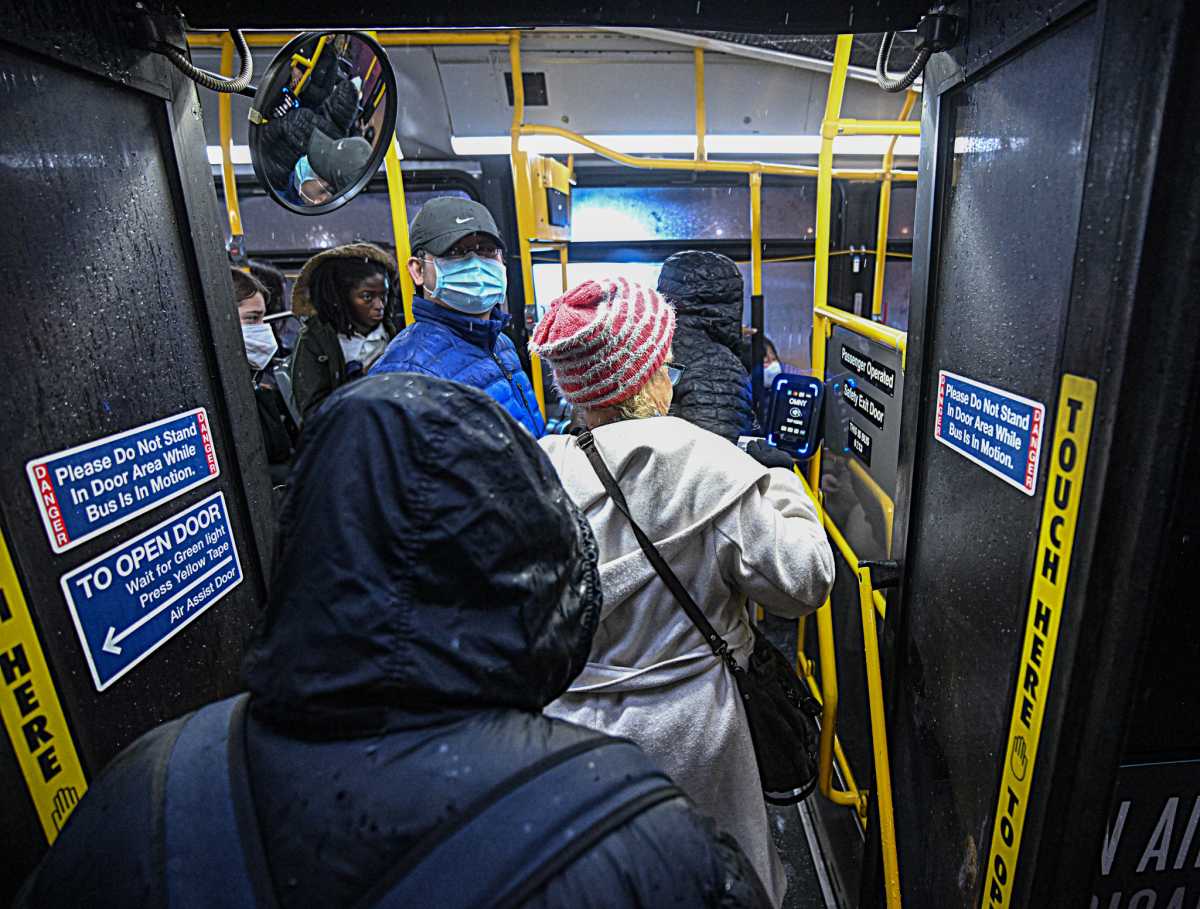
Riders board an MTA bus in Manhattan.
Photo by Dean Moses
The MTA says it is going “European style” in its effort to significantly shake up how it enforces fare evasion on city buses, the agency’s Chair and CEO Janno Lieber revealed on Tuesday.
Lieber announced that the agency is adopting a European-inspired model of enforcement that will involve fare agents, rather than cops, making sure all bus passengers have paid their fares after boarding. The agents, Lieber said, would go up to customers and say, “‘Can you show me your phone or your OMNY card? I can validate that you paid.’”
The MTA boss said that the change is being made because the NYPD does not assign enough police officers to enforce fare payment on the buses. The NYPD already has officers assigned throughout the subway system.
In many European transit systems, riders purchase their tickets and enter without having to pass through a fare gate. The fare is instead enforced by inspectors roaming the buses and trains to check riders’ tickets.
How fare evasion occurs on buses
The biggest problem with bus fare evasion comes from the back of buses, where fare-beaters tend to climb aboard while buses are stopped, and the front and back doors are open.
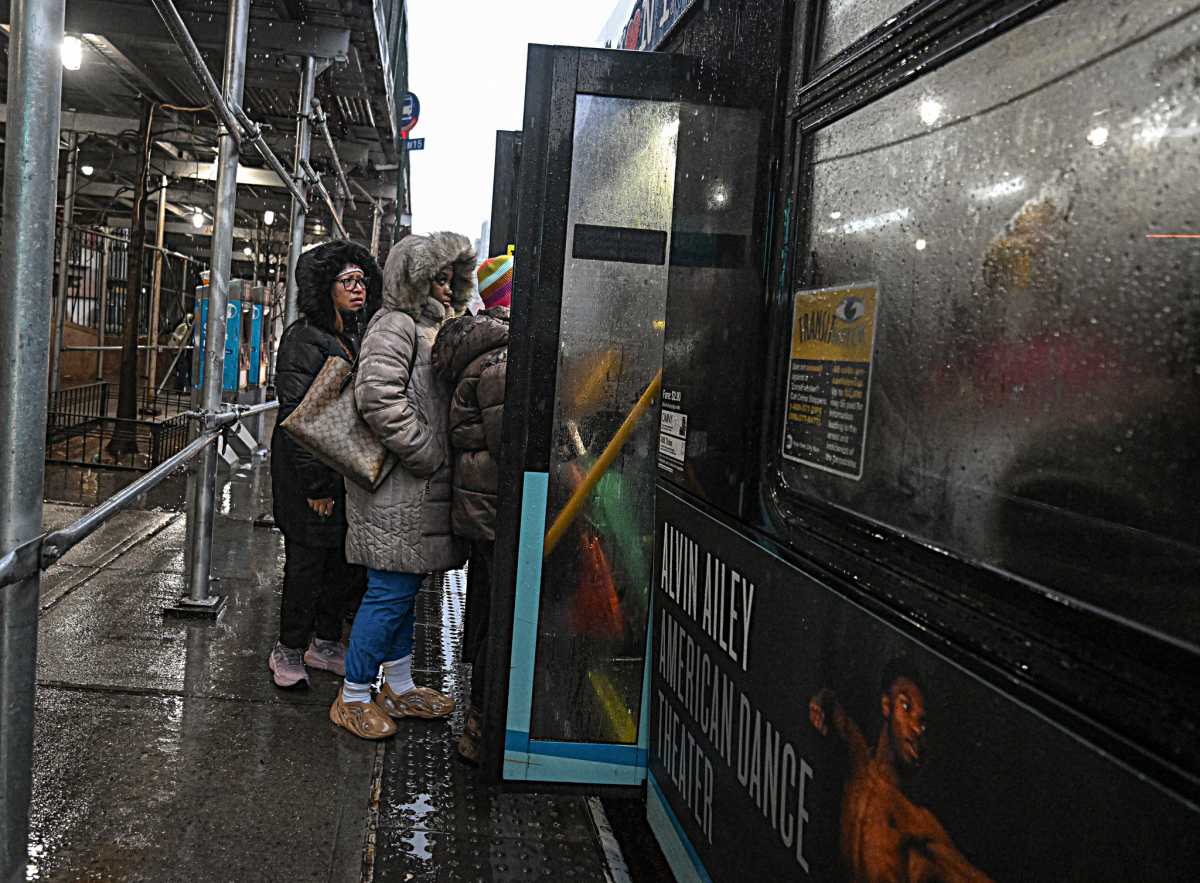
“We hope that will ultimately help us to make more progress on the bus issue, which I think got escalated quickly during COVID, when we told people, get on the back and don’t pay,” Lieber said. “And we never put the toothpaste back in the tube.”
During the pandemic, the MTA permitted all-door boarding on its buses to protect bus drivers from contracting the virus. When that policy was in effect, the MTA was often not collecting bus fares.
Lieber said the change in bus fare enforcement will take place once OMNY, the New York City transit system’s tap-and-ride program, is fully implemented. However, it was unclear what the implementation timeline will actually look like and whether the change would mean the introduction of all-door boarding.
An MTA spokesperson declined to respond to further questions on when and how the switch would take place, saying they had nothing to add to Lieber’s remarks from Tuesday morning.
The MTA contends that while fare evasion on the subways receives more attention, it has also lost hundreds of millions of dollars from bus riders declining to pay. It lost $568 million in unpaid bus fares last year, according to a September report from the Citizens Budget Commission watchdog group.
The MTA’s primary measure to combat bus fare evasion has been deploying its EAGLE Teams, civilian squads of fare inspectors, to enforce payment on select and local buses. The teams, with support from NYPD officers, are also stationed at select and local bus “hubs,” identified to have hight rates of fare evasion.
Gov. Kathy Hochul’s office states that these efforts have been effective. In March, it said that riders paying the fare had increased by 7% at stops where EAGLE Teams were present.
Additionally, MTA Chief Financial Officer Jai Patel said in September that bus fare evasion has fallen in every quarter since the second quarter of last year.
Source link