
SCIENCE
-
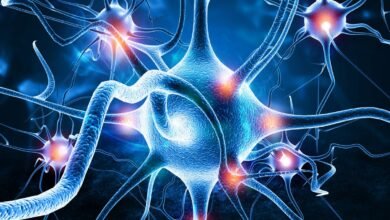
Scientists can now rewire living brains
The human brain holds around 86 billion neurons, wired together in a vast web of hundreds of trillions of connections.…
Read More » -
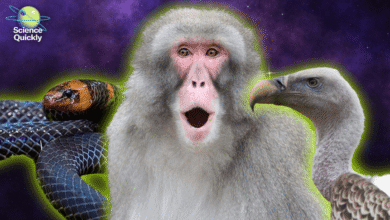
Snakes that cartwheel, vultures that groan, a mysterious Martian moon, and more
Happy Monday, listeners! For Scientific American’s Science Quickly, I’m Rachel Feltman. You’re listening to our weekly science news roundup. Let’s…
Read More » -
How exposing yourself to your fears can tame your anxiety
The first time Kevin MacKenzie scrambled up a slide, a steep stretch of rock exposed by weather and geological forces,…
Read More » -

The Selfish Gene at 50
Fifty years ago Richard Dawkins, a young and relatively unknown ethologist at the University of Oxford, published what would become…
Read More » -

Plants move to get away from their decaying brethren
Plants seem stationary: they don’t skip, fly or walk around. But that doesn’t mean they don’t move. The organisms bend…
Read More » -
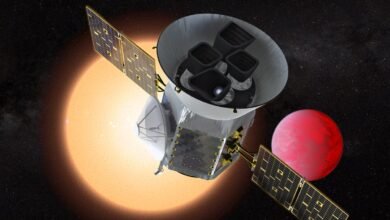
Amateur astronomer harnesses AI to find a possible hidden exoplanet
An amateur astronomer harnessed artificial intelligence agents to find a previously undiscovered exoplanet lurking in publicly available data. Pavel Rabtsevich,…
Read More » -

Could Tutankhamun’s tomb hold clues to a mysterious Egyptian queen?
A growing body of research is generating renewed interest in potential hidden spaces beyond the decorated walls of Tutankhamun’s burial…
Read More » -

The ‘Kelvin wave’ hitting California is a potent warning about sea-level rise
A slow-moving surge of water called a Kelvin wave is arriving in southern California and looks to be about as…
Read More » -
Why the creative brain feeds on movement
Luke Borsten, age 38, has been backpacking and making music since childhood. Today the Portland, Ore.–based filmmaker and musician often…
Read More » -
How to see rainbows on exoplanets
In some ways, finding exoplanets is amazingly easy. It doesn’t necessarily take a huge telescope and sophisticated equipment to detect…
Read More »