


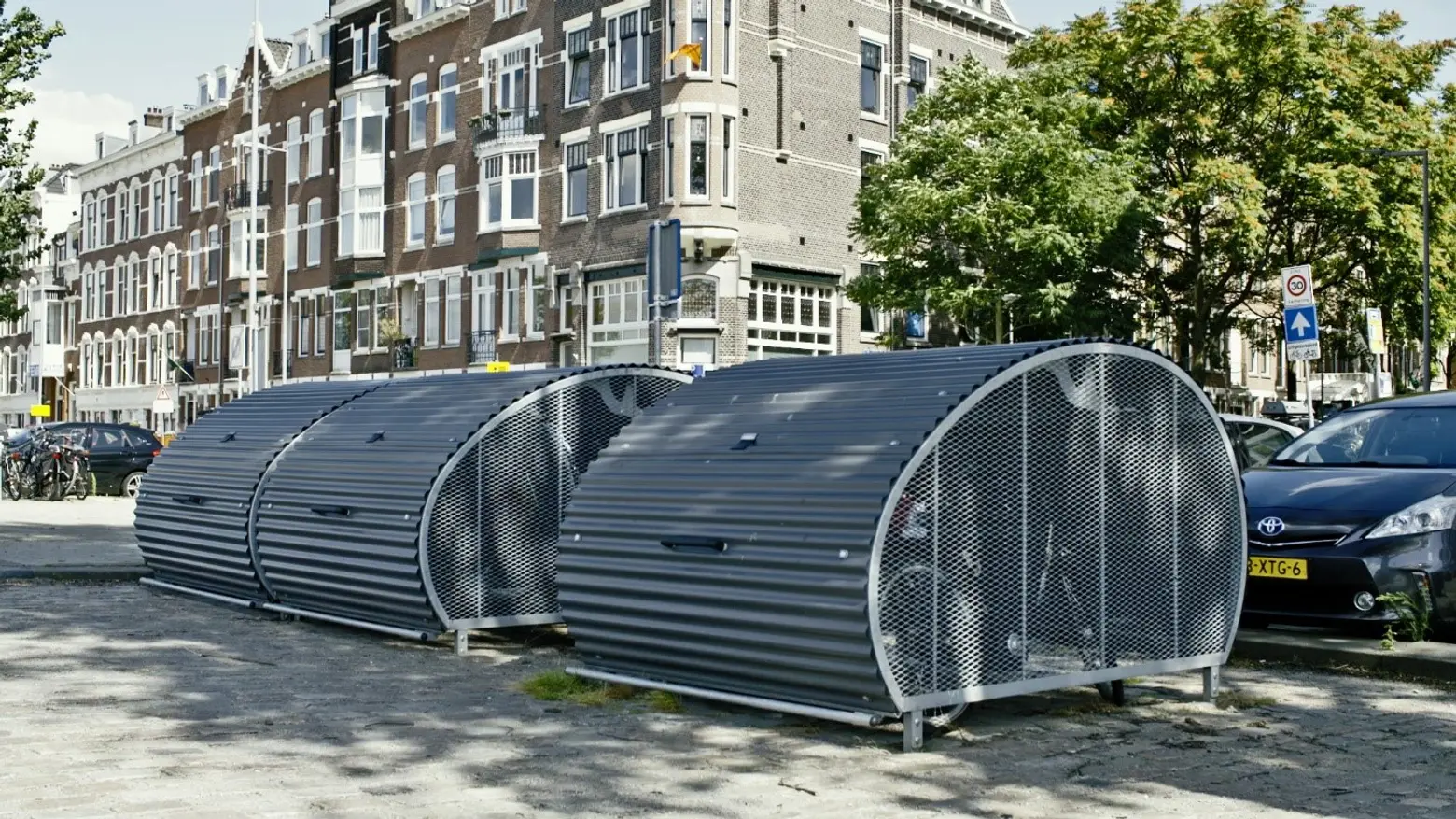
New York City has selected a vendor to install secure bike storage hubs at 500 locations across the five boroughs. The Department of Transportation on Monday announced that it chose Tranzito to create and operate a citywide network of secure bike parking structures, offering cyclists who lack in-home storage a safe place to keep their bicycles. The selection follows a 2024 request for proposals, and the city expects to award a five-year operating contract, with officials set to reveal additional designs and locations at a later date.
More than 600,000 cycling trips take place across the city every day, yet a lack of secure storage leaves riders scrambling to keep their bicycles safe. Because many New Yorkers live in small apartments, some riders cannot store their bikes at home or carry heavy e-bikes and cargo bikes up stairs, creating major barriers to bike ownership.
The initiative aims to address this issue by providing safe and convenient bike storage for New Yorkers. Working with Tranzito, the DOT will plan locations equitably across the five boroughs, incorporating a mix of small and high-capacity facilities, including both enclosed and open-air units at the curbside and off-street.
The DOT will prioritize locations and designs that enhance bike parking near major transit hubs, accommodate e-bikes and cargo bikes, provide long-term storage in residential areas, and include options for e-bike charging.
“One thing I love about our city is how we are always innovating. We’re constantly deploying new tools to make New York smarter, safer, and more livable–and secure bike parking is a perfect example,” Deputy Mayor for Operations Jeffrey Roth said.
“These 500 new bike storage units will make biking safer and more convenient for thousands of New Yorkers, especially those without space to store a bike at home.”
Based in California, Tranzito has operated secure bike parking in the San Francisco Bay Area, Portland, Oregon, and Minneapolis, according to amNY. While these cities have increased ridership through infrastructure investments, none have launched a network of storage facilities at NYC’s scale. With 500 hubs, the city’s program would be the largest in the country.
The five-year contract will begin on May 1, 2026, and the first units will likely appear in the second half of the year. The incoming Mamdani administration will oversee the project.
Gene Oh, CEO of Tranzito, told amNY that he is confident the next administration will honor the contract.
“This program is even aligned with the new administration’s objectives,” Oh said, noting that his firm typically avoids political outreach. “We’re operators… we let the political wings kind of take care of itself.”
Oh said the project focuses on two key groups: current riders who rely on bikes for work, such as delivery workers, and new riders who are hesitant to buy a bicycle without safe storage. Most Tranzito units in development are about the size of a compact car and can store up to six bikes.
While payment details have yet to be finalized, Tranzito uses smartphone-based entry with multi-factor identity verification in other cities. According to Oh, past installations cost roughly $1,000 to $1,500 for standard, non-smartphone iterations with key access. App-connected and Bluetooth-capable systems with remote support can cost between $2,000 and $3,000.
The DOT issued an RFP in May 2024, seeking operators to help create a secure bike storage system with a “variety of small and high-capacity” facility designs, including enclosed and open-air units both at the curb and off-street. The RFP anticipated the first locations would roll out in 2025, with all 500 hubs installed by 2029.
Surprisingly, the city did not select Oonee, a NYC-based company that partnered with DOT in 2022 on a pilot program testing its six-bike corrals across the city. Founder Shabazz Stuart said the city “excluded” Oonee from the DOT process.
“Today was the hardest day of my life,” Stuart wrote in a post on X. “We fought for nearly a decade to bring secure bike parking to NYC and ultimately were completely excluded from the NYC DOT process. To those who have believed in Oonee and our vision, I am deeply sorry.”
“Our proposal was over 500 pages and included the best in the world, and ultimately we were never interviewed or it seems taken seriously. We are trying to learn more.”
RELATED:
Get Insider Updates with Our Newsletter!
Source link