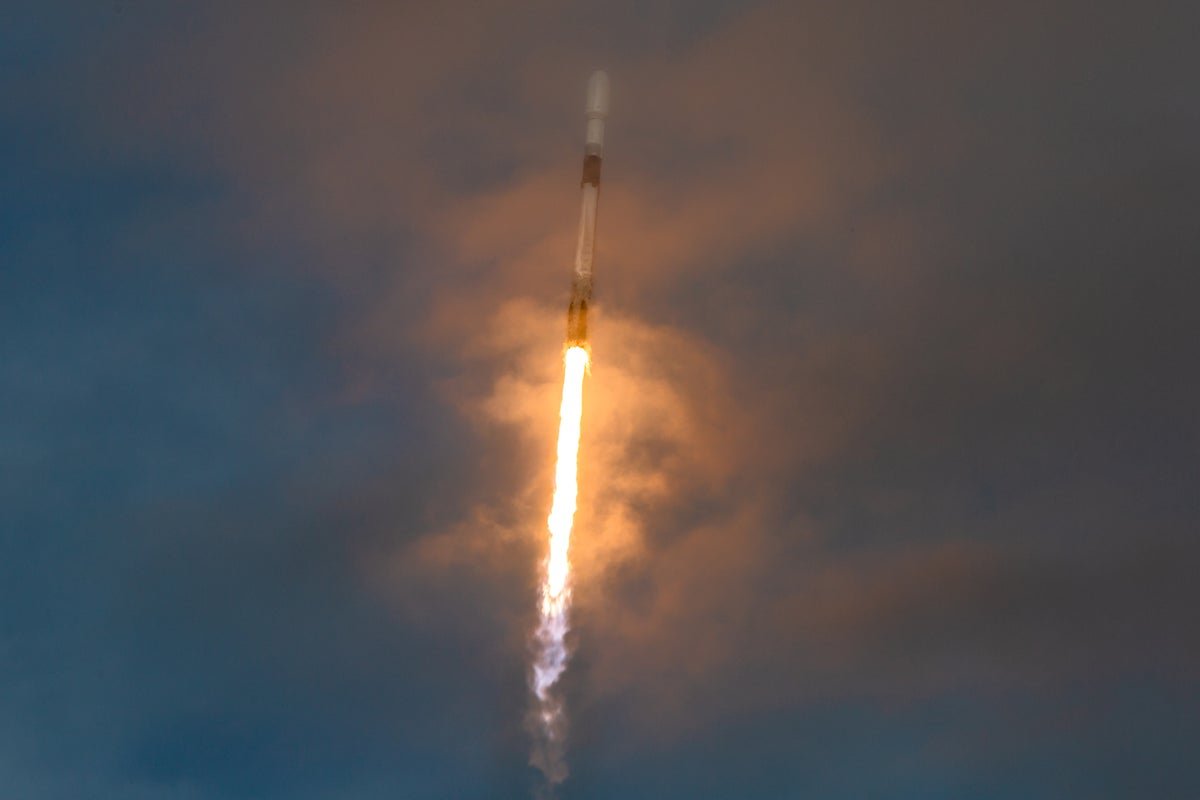

Elon Musk’s SpaceX may be on the cusp of going public: The company, which almost went bankrupt in the 2000s, is mulling an initial public offering (IPO) that would value it at as much as $1.5 trillion. The move could raise tens of billions of dollars for SpaceX, but there’s more than money at stake—the future of space exploration hangs in the balance, too.
SpaceX is integral to numerous critical missions with both NASA and the Pentagon, including ferrying crew and cargo to the International Space Station, placing satellites in orbit and being key to NASA’s plan to return astronauts to the moon by 2028. Its Starlink satellite Internet service is booming. And lest we forget, the company has its own long-term vision to land on and even colonize Mars.
Going public would put SpaceX in the company of older, traditional aerospace heavyweights, such as Boeing and Northrop Grumman, and industry upstarts, such as Rocket Lab and Firefly Aerospace. Still, SpaceX’s plans are startling, experts say.
On supporting science journalism
If you’re enjoying this article, consider supporting our award-winning journalism by subscribing. By purchasing a subscription you are helping to ensure the future of impactful stories about the discoveries and ideas shaping our world today.
“The fact that it’s maybe an all-in, holistic SpaceX IPO is a bit of a surprise,” says Matthew Weinzierl, a Harvard Business School researcher, who studies the private space sector. There was a sense that Musk might take Starlink, a subsidiary of SpaceX, public because it makes so much money but not that he would do so with the whole company, Weinzierl says.
If SpaceX goes public, that will mean more scrutiny, more shareholder interest and—perhaps most critically for space science—more investment to bolster its research and development work. “SpaceX has been a major driver of a lot of what we’re seeing in outer space right now,” both positive and negative, says Aaron Boley, a planetary scientist at the University of British Columbia and co-founder of the Outer Space Institute, a network of space experts.
An IPO could bring in an influx of capital to fund new projects, Weinzierl says, such as building solar-powered, orbital data centers to support artificial intelligence, perhaps including that of Musk’s own AI company xAI. Musk had suggested as much in October.
Fresh money could also support SpaceX in its work with NASA and the U.S. Department of Defense. The company’s contracts include billions of dollars to transport NASA astronauts and cargo to and from space, a $255-million deal to launch NASA’s Nancy Grace Roman Space Telescope in the spring of 2027 and billions of dollars to loft defense satellites into Earth orbit as part of the National Security Space Launch program. And in late October, the Wall Street Journal reported that SpaceX was set to secure a $2-billion contract to work on President Donald Trump’s Golden Dome missile defense project, for which it would develop satellites to track missiles and aircraft.
Considering that NASA and the Pentagon are already so reliant on the commercial space industry—and especially SpaceX—going public might not change the company’s relationship with either agency much, says Clayton Swope, deputy director of the Aerospace Security Project at the Center for Strategic & International Studies, a Washington, D.C.–based think tank. And SpaceX may have another government ally in recently confirmed NASA administrator Jared Isaacman. He flew to space with Space on two missions: Inspiration4 and Polaris Dawn.
SpaceX’s potential IPO comes at a moment of grave uncertainty for NASA. Doubt is swirling around the future of the agency’s Artemis moon program, which is supposed to land astronauts on the lunar surface in 2028. SpaceX nabbed the NASA contract to build and operate its Human Landing System using SpaceX’s Starship megarocket as part of the Artemis III and Artemis IV missions. (Jeff Bezos’s rival company, Blue Origin, received the contract for Artemis V.)
Yet Artemis III—slated to be the first time astronauts will set foot on the moon since Apollo 17 in 1972—has been delayed numerous times, in part because of problems with SpaceX’s still-in-development Starship. To support Artemis, SpaceX plans to launch multiple Starships that would be able to refuel while in orbit and to send a modified Starship lander to the lunar surface. But the company has yet to show that the rocket is capable of any of that. Now SpaceX is in danger of losing the contract altogether: citing rising competition with China, U.S. secretary of transportation Sean Duffy, then acting chief of NASA, reopened competition for the Artemis III contract in October.
What all this means for would-be investors is that buying a stake in SpaceX comes with risks, especially considering the multiple mishaps the company has faced with Starship—not to mention Musk’s own controversial politics and business practices.
“If you’re buying into an IPO for SpaceX, then you’re buying into the way they do business, which has explosive failures as well as spectacular successes,” Swope says. Still, while SpaceX’s visions for the moon and Mars may or may not come to pass, the company continues to attract top-tier talent in addition to investor interest.
A publicly traded SpaceX would also mean that shareholders would have a voice in the company’s decisions, which could create tension with Musk, who is “not fond” of checks on his authority, according to Wendy Whitman Cobb, a professor of strategy and security studies at the School of Advanced Air and Space Studies at Air University. Planetary scientist Boley hopes shareholders would hold SpaceX to account regarding its environmental and security record: the company has numerous “dual-use” spacecraft that serve both civilian and military customers. And with nearly 10,000 Starlink satellites in orbit, its risk of collisions—and potential debris raining down on Earth—is also growing.
Ultimately, it remains to be seen if Musk and SpaceX’s leadership will go through with an IPO.
“Things seem to change fast in D.C. and the space community. It might not be a done deal,” Swope says.
Source link