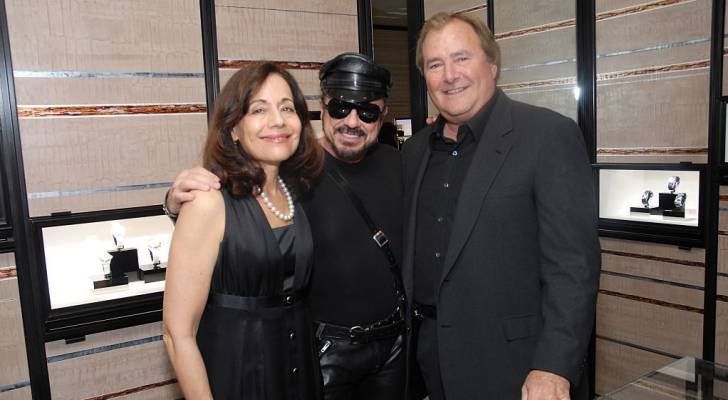
A grand mansion from Hollywood’s Golden Age is in the midst of a nasty legal battle.
At the center of this dispute is 79-year-old Karen Winnick (pictured: left), widow of the late Global Crossing founder Gary Winnick (pictured: right). Currently, she’s scrambling to stop the foreclosure of her 40,000-square-foot residence, named Casa Encantada, in Bel-Air and becoming “effectively destitute.”
In a cross-complaint (1) filed in the Los Angeles Superior Court, Karen accuses lender CIM Group of orchestrating a sneaky “loan-to-own scheme” that ballooned an initial $100 million loan her husband accepted into $155 million in debt.
She says she never understood the terms or consented to key collateral, which includes a Malibu home, fine art pieces and her wedding ring.
Karen argues she only learned the full scope of the deal after Gary’s death in 2023 and didn’t have the “financial sophistication” to understand how this transaction worked. The complaint goes on to demand a jury trial with allegations including fraud and elder financial abuse.
For its part, CIM denies any wrongdoing. In its opposition filings, the company calls the Winnick family’s allegations “fantastical” and claims Karen knowingly participated in the loan because she accessed funds after Gary’s death.
Although Karen says she has a buyer who would cut the debt by 80%, CIM isn’t convinced. Instead, the company is holding firm on its mid-December foreclosure, and it says the Winnicks’ proposed $130 million price is far too low.
As of writing, there is no word on whether a foreclosure sale has commenced just yet.
So, what is the “loan-to-own” accusation that’s causing all of this chaos at Casa Encantada? Basically, this refers to a deceptive practice in real estate finance where lenders issue loans designed to default (2).
Instead of earning most of their profit from interest payments, the lender’s real goal is to take control of a valuable property. To do this, lenders often rely on aggressively structured loan terms, such as high or variable interest rates, that cause the debt to climb rapidly.
The point is that the borrower will struggle to keep up with these payments, so the lender can swoop in and take possession of the collateral.
Ultra-high-end homes like Casa Encantata are prime targets for these deals since they’re scarce and can usually be resold in the booming luxury real estate market (3) where wealthy buyers aren’t as cost-sensitive (4).
Lenders are more willing to extend large loans in these cases because they believe the property is ultimately worth more than the debt they’re issuing. If the borrower falters, the lender stands to acquire a dream home at a steep discount.
Read More: This is the quiet portfolio shift many wealthy investors are making in 2026. Should you consider it too?
When a borrower signs a secured loan, they legally give the lender the right to seize or force the sale of any assets posted as collateral if payments aren’t made. Luxury loans often go further, including personal guarantees from spouses or family members.
So, even if someone didn’t understand the paperwork, a signature or a stand-alone guaranty page can bind them.
With all of these risks, why would borrowers enter into such an arrangement? Remember that these deals aren’t issued as “loan-to-own” — a non-technical term for this predatory practice. Instead, when borrowers see these deals, they’re usually interested in the quick access to large amounts of capital.
Since the home itself secures the loan, banks or private lenders may approve financing more easily than they would based solely on income or credit history.
However, that doesn’t get rid of all the risks with high interest rates and unforgiving repayment schedules. The same flexibility that makes these loans attractive can turn dangerous, especially if the lender has their eyes on seizing the underlying property.
As Karen Winnick’s case highlights, even high-net-worth families could face foreclosure if they don’t fully understand their loan terms. Unlike traditional mortgages, private arrangements for luxury real estate often involve complexities such as collateral bundles and personal guarantees that can put borrowers in serious trouble.
Although the average homeowner doesn’t have to worry about dealing with multi-million-dollar mansions, this story highlights the importance of clarity and communication in estate planning. If only one person manages the finances and doesn’t share critical details, it could leave survivors like Karen Winnick in a vulnerable position.
To prevent devastating surprises down the line, take time to be transparent about finances, informing beneficiaries what loans exist and how assets are titled. It’s equally important to understand how lenders can legally pursue collateral when a borrower dies or defaults.
Implementing specific protections in advance, such as trust structures or documented spousal consent requirements, might have helped shield a home like Casa Encantata from aggressive collection efforts.
With a little extra planning and transparency, Gary Winnick might have prevented significant hardships for his surviving family. It’s a harsh reminder that the fate of our fortunes is often in the fine print.
We rely only on vetted sources and credible third-party reporting. For details, see our editorial ethics and guidelines.
Wall Street Journal (1); The Real Deal (2); Business Wire (3); Coldwell Banker (4)
This article provides information only and should not be construed as advice. It is provided without warranty of any kind.