
Oil crosses $100 for the first time since 2022 as Iran war keeps Strait or Hormuz closed, forces shut-ins

Oil prices crossed $100 per barrel for the first time since the early months of the Russian invasion of Ukraine in 2022, with no signs of slowing down in what has been the fastest oil rally since the 1980s.
Futures on international pricing benchmark Brent crude (BZ=F) and US benchmark West Texas Intermediate crude (CL=F) both jumped more than 15% to cross $108 per barrel nearly instantly after trading began at 6 p.m. ET on Sunday. Brent crude and WTI crude have now gained more than 50% and 60%, respectively, since the conflict began.
US futures plummeted into the red as the session opened. Futures on the S&P 500 (ES=F) and the Nasdaq 100 (NQ=F) both lost roughly 1.5%, while contracts on the Dow Jones Industrial Average (YM=F) lost a deeper 2%.
Since the US and Israel began air strikes against Iran on Feb. 28, killing Supreme Leader Ali Khamenei and stoking violent retaliation from the Iranian regime, oil prices have soared, notching their largest weekly gain since at least 1985.
Critically, the conflict has sent tanker traffic through the Strait of Hormuz to a standstill. Roughly 20 million barrels of oil per day, or a fifth of the world’s supply of seaborne crude, crosses the waterway connecting the Persian Gulf to the wider international market every day. Data from Vortexa shows that roughly 16 million bpd of oil has been stranded behind the strait and cut off from the global market.
Macquarie strategist Vikas Dwivedi wrote in a recent client note that, “A few weeks of Hormuz closure will create a domino effect of events that could push crude to $150 or higher.”
In the week since the US and Israeli air strikes began, what started as a localized conflict focused on destroying Iran’s nuclear capacity and potentially inciting regime change has widened out into a war that has engulfed the Middle East.
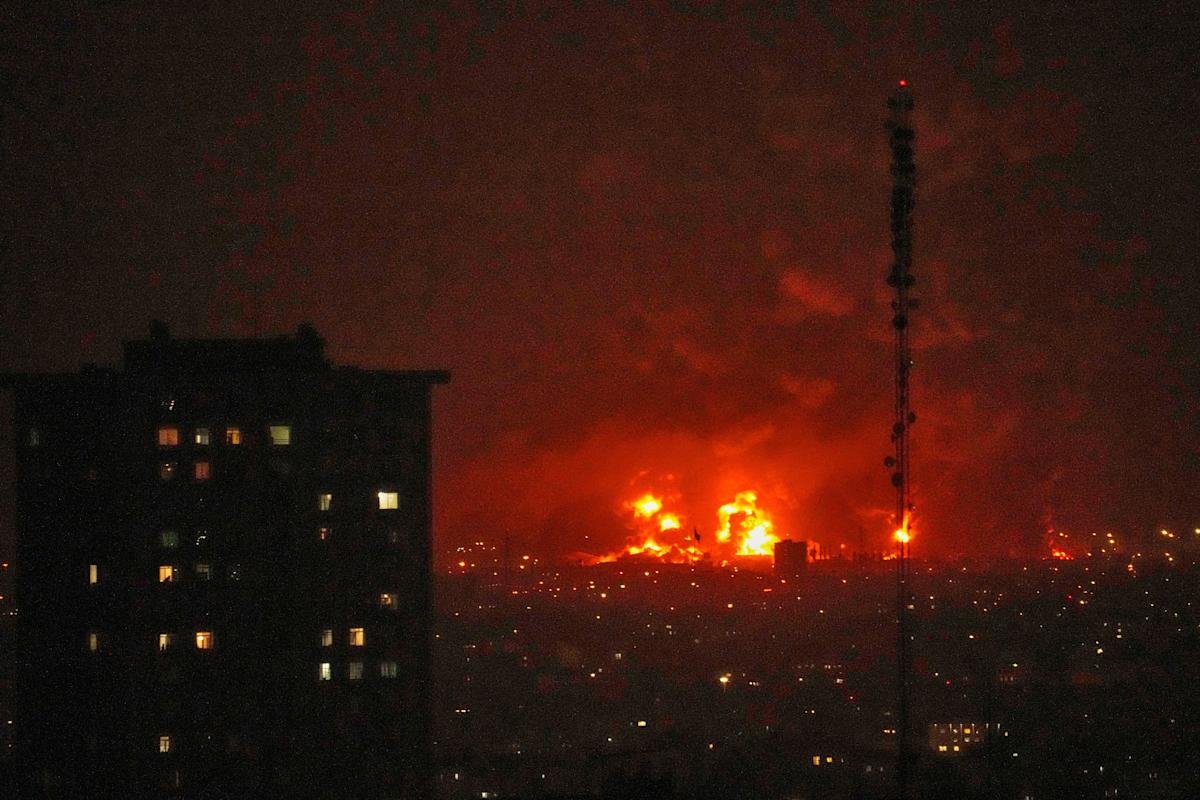
Airports, apartment buildings, military bases, and other infrastructure through Saudi Arabia, the United Arab Emirates, Bahrain, Oman, and a host of other countries have all been subject to missiles and drone strikes by Iran. The skies above Iran blackened over the weekend after fuel depots near the cities of Tehran and Kharaj were hit by air strikes.
The conflict has also increasingly turned toward energy infrastructure throughout the region, threatening even further a supply chain already pushed to its limits.
Bahrain’s Bapco Energies refinery has been attacked; Saudi Arabia’s Ras Tanura refinery has been taken offline; and Qatar’s Ras Laffan LNG complex has declared force majeure. Oil tankers in the Persian Gulf have been struck by missiles and drones, and Iran’s Revolutionary Guards have threatened violence against any ship that attempts to cross the Strait, even as they declare the passage nominally “open.”
Source link