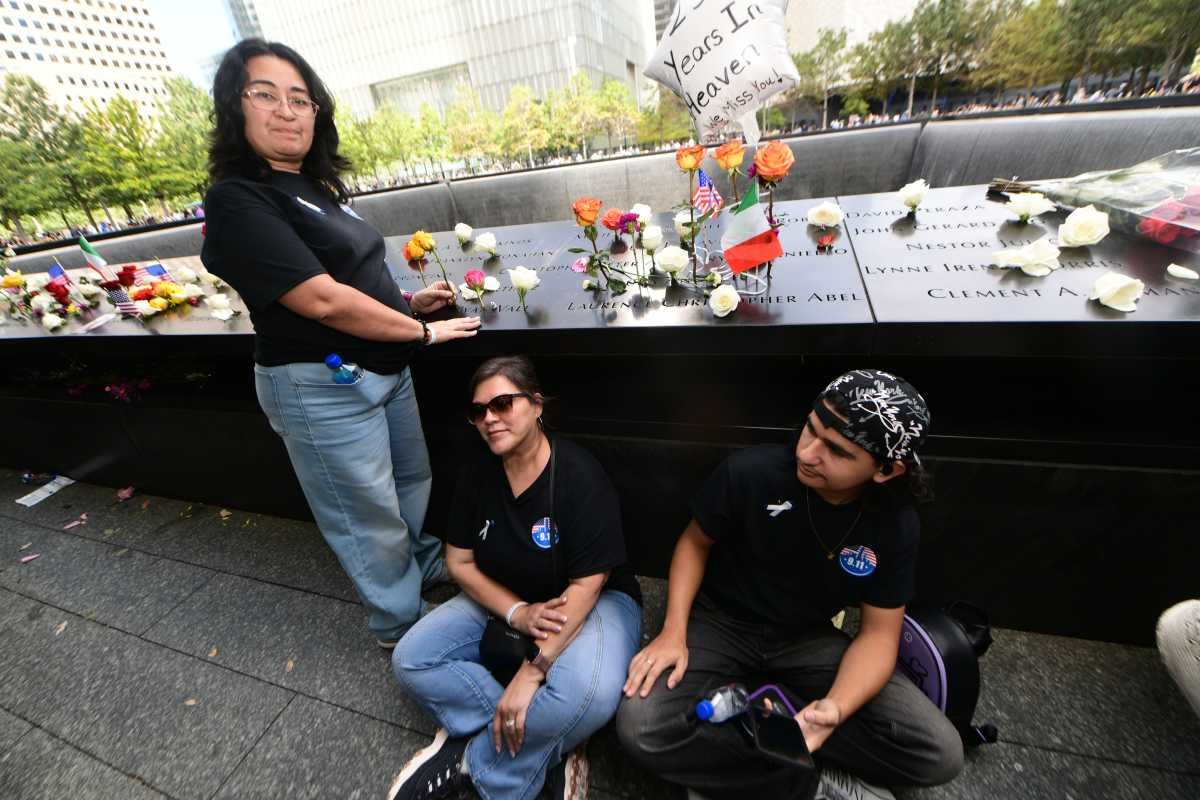


Twenty-five years ago, New York’s middle-class workers did not hesitate to step up after 9/11 to help this city rebuild, recover, and rekindle in the aftermath of the senseless terror attacks on the World Trade Center. Dozens of union construction trades, alongside first responders, walked toward the wreckage as many others were still trying to process what happened.
Thousands of Building and Construction Trades members joined FDNY, NYPD, and Port Authority Police (PAPD) as they spent the following months in the pits of Ground Zero helping with disaster response, and the following years helping to rebuild what had been lost.
They did not do it for the headlines, but because it was the work in front of them, and New York City needed willing hands to do it. This sentiment echoes a theme that has existed throughout this city’s history: middle-class workers are the foundation that keeps us whole, no matter the circumstances.
As members of the FDNY, NYPD, and PAPD carried out their first responder work during and after the attacks, it was ironworkers who cut through twisted steel in conditions no safety manual had anticipated; it was laborers who spent months in debris fields searching for remains so devastated families could find closure; it was electricians and engineers who restored infrastructure and power to Lower Manhattan; and the list goes on. These dedicated men and women, from every borough and every background, took on this exceedingly dangerous and exhausting work, much to the detriment of their own health and well-being, for the sake of their neighbors, their fellow New Yorkers, and their country, reflecting the values of the union trades and first responder communities alike.
This is why 25 years on, commemorating the events of Sept. 11, 2001, needs to be more than a memorial. It must be a commitment. A commitment to not only fully funding and protecting programs like the World Trade Center Health Program and the September 11th Victim Compensation Fund but also building real safety standards and healthcare protections into how we respond to every disaster, natural or man-made.
It needs to be a recognition, through tangible programs and policies, that skilled construction workers and first responders are not simply labor to be deployed. They are the backbone of how this country survives its worst days and then rebuilds after them. And they are worth investing in.
Twenty-five years on, the newly developed Lower Manhattan has become a boon for development, economic investment, and New York City culture, all through continued investment and commitments to creating middle-class careers and family-sustaining opportunities for hardworking people. The neighborhood now stands as a testament to what middle-class people are capable of when their communities need them and represents a recovery effort that is not just meant to be responsive but proactive and evolutionary.
This is at the heart of the missions of the NYC Building Trades and HEART 9/11, as we have worked to mobilize and empower construction workers and first responders to rebuild community centers and homes in disaster-hit communities across the country. The same hands that rebuilt what was once Ground Zero have kept showing up, in Louisiana, in Puerto Rico, in the Carolinas, and where the next tragedy strikes. That is what solidarity among working people looks like when it is put into practice and why it is critical to continue to build up the middle class. It serves as a reminder that we need to stand behind them just as fully as they have stood for us since that fateful day and throughout this city’s history.
When the middle class is strong, New York City is strong; even in the wake of unimaginable loss and disaster. This was the reality 25 years ago and remains the reality now. As we recognize this milestone, it is key that we remain committed to protecting and uplifting working people in a manner that ensures that they can live comfortably in the city that they’ve built and rebuilt countless times.
LaBarbera is the president of the Building and Construction Trades Council of Greater New York. Keegan is the president and founder of HEART 9/11.
Source link