
Tapeworms are typically thought of as a gut problem: Eat undercooked meat and you could be left with an intestinal parasite. But there’s another, more unsettling way these creatures can enter your body: you can swallow their microscopic eggs in food or water contaminated by an infected person’s feces.
That’s exactly what happened to a 52-year-old woman in the Philippines. She had no idea. For four months, she suffered headaches and visual hallucinations—and she eventually went to the emergency room at her local hospital.
The woman spoke fluently, but her words often did not make sense, resembling a “word salad.” She struggled to understand speech, name objects, repeat words and follow simple commands, says Bonifacio C. Pedregosa II, a neurologist at Jose R. Reyes Memorial Medical Center in the Philippines.
On supporting science journalism
If you’re enjoying this article, consider supporting our award-winning journalism by subscribing. By purchasing a subscription you are helping to ensure the future of impactful stories about the discoveries and ideas shaping our world today.
In a case report published in the New England Journal of Medicine, Pedregosa and a co-author lay out how the woman’s symptoms presented a medical mystery—one with a gory solution.
The woman’s visual hallucinations came and went, Pedregosa says. “She described seeing animals and people who were not actually present during these episodes,” he explains. Doctors initially wondered whether she had a psychiatric disorder, but her pronounced language comprehension problems prompted them to image her brain to get a closer look.
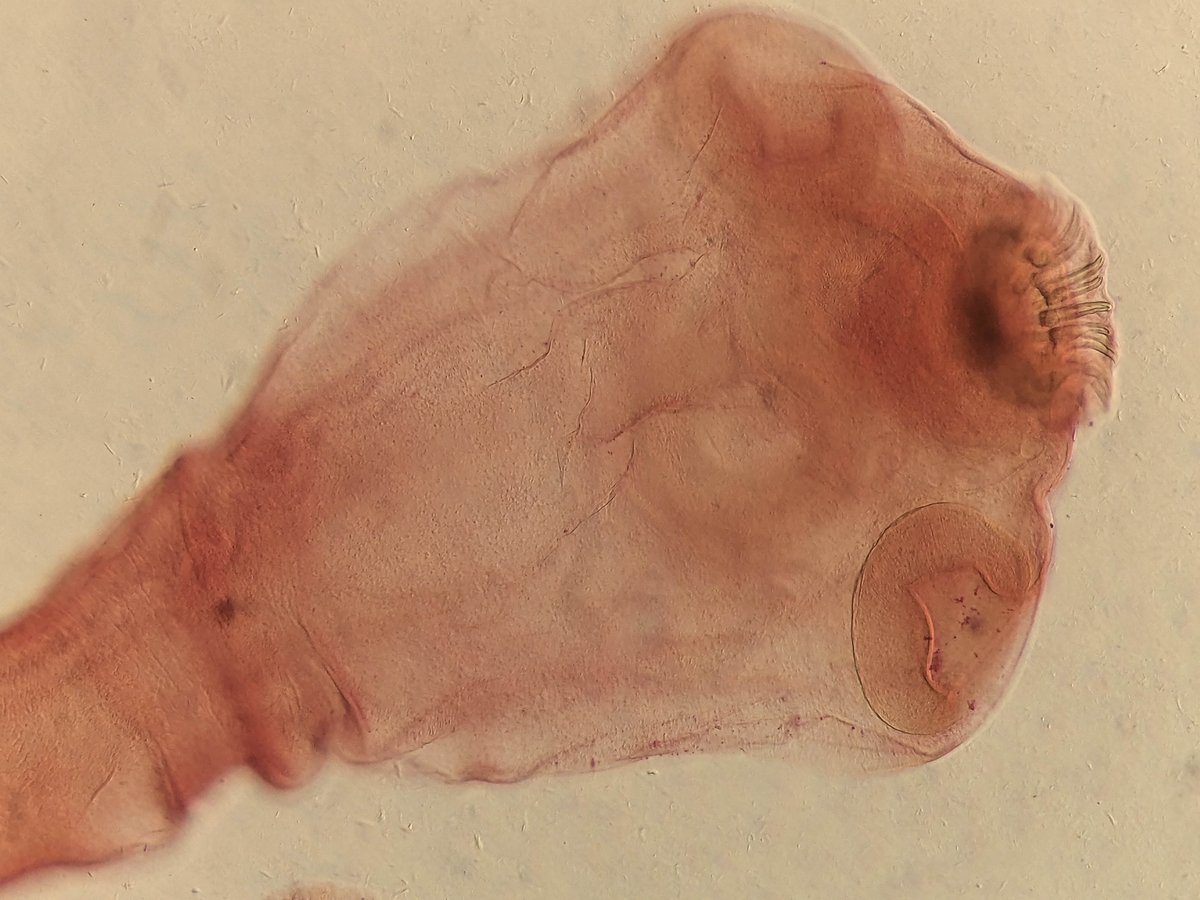
The scans revealed the source of the mystery: cysts scattered throughout her brain. Many contained a tiny bright dot—the scolex, the headlike part of a developing tapeworm larva, armed with suckers and hooks.
That telltale sign led the doctors to diagnose neurocysticercosis, an infection in which larval cysts of the pork tapeworm Taenia solium lodge in the brain.
Brain-wave testing also showed abnormal electrical activity, leading doctors to suspect her hallucinations were related to seizures.
Once swallowed, the tapeworm’s eggs hatch in the intestine, releasing larvae that can enter the bloodstream and travel to other tissues throughout the body—including the brain.
A common route of infection is fecal-oral spread: a person carrying an intestinal tapeworm sheds microscopic eggs in their feces, and poor hand hygiene while preparing food or even touching surfaces can allow those eggs to be swallowed by someone else.
Doctors couldn’t pinpoint where or how the woman became infected. In the previous year, however, she had spent time in evacuation centers where sanitation and food-handling hygiene were poor, Pedregosa says. In this case, the doctors treated the woman for the parasitic infection and suspected seizures. A month later, her symptoms had resolved, and repeat brain scans showed that the cysts had shrunk and the distinctive dots had disappeared.
But neurocysticercosis can be fatal. Dying parasites can trigger swelling in the brain, while cysts in certain locations can block the normal flow of fluid around the brain or cause seizures.
Hallucinations have appeared in other cases. In one case, a 15-year-old in Peru had brain scans resembling Swiss cheese and developed visual and auditory hallucinations, while another patient presented with hallucinations, as well as paranoid delusions.
Subscribe to Support Independent Journalism
Great science journalism requires human expertise, time, effort and creativity. And it costs money. That’s why I and the journalists here at Scientific American hope you’ll join our community.
When you subscribe, you are supporting staff and freelance journalists who are passionate about telling science stories that are true, important and compelling. Our editors and reporters are often experts in their fields, which means they understand the nuances of big discoveries and can untangle the breakthroughs from the hype. With a subscription, you are also supporting rigorous fact-checking to ensure the words we publish are precise and accurate. And you’re supporting original illustrations, graphics and photos that bring you closer to an advanced laboratory, an ice sheet in Antarctica or a space mission in orbit. You’re helping us craft other types of high-quality journalism as well: Our newsletters are carefully written, edited and curated by staffers you have or will come to know and love. Our Science Quickly podcast is based on original reporting, collaboration with editors and scientists and exacting production.
Subscriptions keep this engine running so we can continue to deliver thoughtful, rigorous and independent science journalism to you. In an era of viral misinformation, this work is crucial. If you value what we do, I hope you’ll consider joining us as a subscriber
Source link