

15 Million Years before the Megalodon, This Giant Ancient Shark Prowled the Oceans
A humungous shark that lived 115 million years ago surpassed the size of modern-day great whites, paleontologists discovered
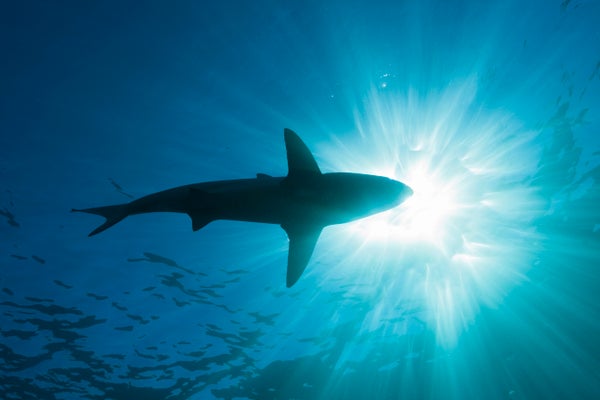
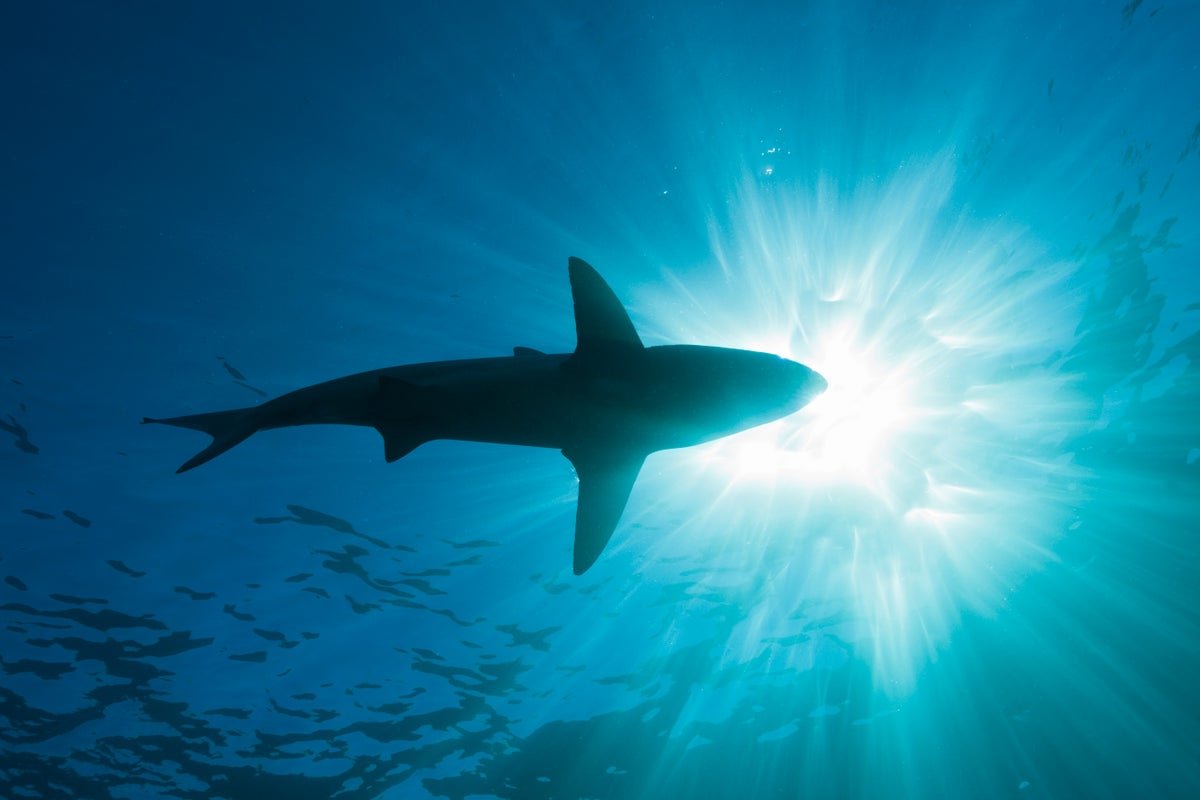
Reinhard Dirscherl via Getty Images
Before the famously huge megalodon, another fearsome ocean predator roamed the seas. According to a paper published earlier this year in Communications Biology, a massive shark that exceeded the size of modern-day great whites prowled the water off what is now Australia 15 million years before the megalodon arose.
By analyzing a set of five vertebrae found on an Australian beach, paleontologists estimated that this ancient shark likely spanned about eight meters in length—for comparison, great white sharks tend to grow to around six meters today.
“It would’ve looked for all the world like a modern, gigantic shark, because this is the beauty of it,” said Benjamin Kear, a senior curator at the Swedish Museum of Natural History and a study co-author, to the Associated Press. “This is a body model that has worked for 115 million years, like an evolutionary success story.”
On supporting science journalism
If you’re enjoying this article, consider supporting our award-winning journalism by subscribing. By purchasing a subscription you are helping to ensure the future of impactful stories about the discoveries and ideas shaping our world today.
Although sharks have a 450-million-year-long history on Earth, the ancestors of modern great whites don’t show up in the fossil record until 135 million years ago. And crucially, these ancestors were typically small fry—just a meter or so in length. Older discoveries had suggested that truly giant sharks such as megalodons (which could reach 17 meters) evolved around 100 million years ago. But the new analysis suggests that giant sharks came on the scene earlier than previously thought.
The team behind the discovery now plans to look for other ancient giant shark remains to try and color in some more of sharks’ evolutionary tree.
“They must have been around before,” Kear told the AP. “This thing had ancestors.”Before the famously huge megalodon, another fearsome ocean predator roamed the seas. According to a paper published earlier this year in Current Biology, a massive shark that exceeded the size of modern-day great whites prowled the water off what is now Australia 15 million years before the megalodon arose.
By analyzing a set of five vertebrae found on an Australian beach, paleontologists estimated that this ancient shark likely spanned about eight meters in length—for comparison, great white sharks tend to grow to around six meters today.
“It would’ve looked for all the world like a modern, gigantic shark, because this is the beauty of it,” said Benjamin Kear, a senior curator at the Swedish Museum of Natural History and a study co-author, to the Associated Press. “This is a body model that has worked for 115 million years, like an evolutionary success story.”
Although sharks have a 450-million-year-long history on Earth, the ancestors of modern great whites don’t show up in the fossil record until 135 million years ago. And crucially, these ancestors were typically small fry—just a meter or so in length. Older discoveries had suggested that truly giant sharks such as megalodons (which could reach 17 meters) evolved around 100 million years ago. But the new analysis suggests that giant sharks came on the scene earlier than previously thought.
The team behind the discovery now plans to look for other ancient giant shark remains to try and color in some more of sharks’ evolutionary tree.
“They must have been around before,” Kear told the AP. “This thing had ancestors.”
It’s Time to Stand Up for Science
If you enjoyed this article, I’d like to ask for your support. Scientific American has served as an advocate for science and industry for 180 years, and right now may be the most critical moment in that two-century history.
I’ve been a Scientific American subscriber since I was 12 years old, and it helped shape the way I look at the world. SciAm always educates and delights me, and inspires a sense of awe for our vast, beautiful universe. I hope it does that for you, too.
If you subscribe to Scientific American, you help ensure that our coverage is centered on meaningful research and discovery; that we have the resources to report on the decisions that threaten labs across the U.S.; and that we support both budding and working scientists at a time when the value of science itself too often goes unrecognized.
In return, you get essential news, captivating podcasts, brilliant infographics, can’t-miss newsletters, must-watch videos, challenging games, and the science world’s best writing and reporting. You can even gift someone a subscription.
There has never been a more important time for us to stand up and show why science matters. I hope you’ll support us in that mission.
Source link