
Get ready for a new era of digital connection and engagement, where social platforms reflect your personal needs and desires, without you having to do anything more than use them, with AI tools getting increasingly good at understanding a broader range of contextual clues and insights.
That’s what Meta CEO Mark Zuckerberg has outlined in Meta’s latest earnings update, in which he talked about the future of AI, VR, the development of AI glasses, and more.
Zuckerberg’s comments come on the back of Meta’s strong Q4 2025 results, which showed that its ad business is well-placed to support its burgeoning AI investment.
And soon, Zuckerberg says, we’re going to see the fruits of those projects, as opposed to having to wait years for the next stage of actual artificial intelligence.
As per Zuckerberg:
“In 2025, we rebuilt the foundations of our AI program [and] over the coming months, we’re going to start shipping our new models and products, and I expect us to steadily push the frontier over the course of the new year.”
So, how will that work, and what can you expect Meta AI to do for you within this new digital paradigm?
Well, Meta’s big advantage on this front, according to Zuck, is its vast knowledge base, which already knows all about you. Indeed, previous research has shown that Facebook data, based on your demographic profile, interests, engagement, etc., can create a highly accurate psychological profile of each user.
And Meta’s planning to use that to power its next-level AI:
“We’re starting to see the promise of AI that understands our personal context, including our history, our interests, our content and our relationships.”
Meta is unmatched in this regard, and if it can get this right, it could provide increasingly accurate recommendations, across a range of elements.
“Our world-class recommendation systems are already driving meaningful growth across our apps and ads business, but we think that the current systems are primitive compared to what will be possible soon. Today, our systems help people stay in touch with friends, understand the world, and find interesting and entertaining content. But soon, we’ll be able to understand people’s unique personal goals and tailor feeds to show each person content that helps them improve their lives in the ways that they want.”
That’s an ambitious goal, and goes way beyond the scope of the current wave of generative AI models. But again, Meta does have access to more personal insights than any other company, which could position it for the next stage of AI-powered recommendation and guidance.
Which also, Zuckerberg says, relates to products:
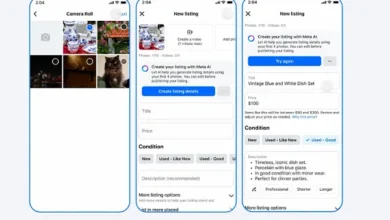
“This also has implications for commerce. Our ads today help businesses find just the right, very specific people who are interested in their products. New agentic shopping tools will allow people to find just the right, very specific set of products from the businesses in our catalog.”
Again, the opportunities here are massive, though it remains to be seen just how accurate, and how valuable Meta’s evolving AI systems will be. If it can come close to this promise, the value for Meta will be huge, but correlating all of that data into a viable system that can power these recommendations will be a challenge.
Zuckerberg also talked about evolving media engagement, and the opportunities of AI to power new creative possibilities.
“Soon, we’ll see an explosion of new media formats that are more immersive and interactive and only possible because of advances in AI. Our feeds will become more interactive overall. Today, our apps feel like algorithms that recommend content. Soon, you’ll open our apps, and you’ll have an AI that understands you and also happens to be able to show you great content or even generate great personalized content for you.”
I’m not convinced that AI is ever going to be able to produce truly valuable content in this respect, nor that we should be pushing for such, but Zuckerberg’s view is that Meta’s platforms will soon learn about you, in all new ways, which will change the way that we engage.
Zuck also talked up AI glasses, and how they’ll contribute to the next phase of connection.
“Glasses are the ultimate incarnation of this vision. They’re going to be able to see what you see, hear what you hear, talk to you, and help you as you go about your day, and even show you information or generate custom UI, right there in your vision. Sales of our glasses more than tripled last year, and we think that they’re some of the fastest-growing consumer electronics in history. Billions of people wear glasses or contacts for vision correction, and I think that we’re at a moment similar to when smartphones arrived, and it was clearly only a matter of time until all those flip phones became smartphones. It’s hard to imagine a world in several years where most glasses that people wear aren’t AI glasses.”
Having an always-on AI companion has increased the appeal of Meta’s latest model AI glasses, which are now selling so fast that Meta’s struggling to keep up with demand. Additions like auto-translation and in-ear calling tools are also helpful, and it does seem like sales are only going to increase.
And that’s before we even get to its AR glasses, which are still scheduled for release in 2027.
On-screen overlays could take this to the next-level, and make glasses the true successor to phones. That’s another element of Meta’s broader takeover plans, which Zuckerberg hopes will lead to a big return on Reality Labs investment.
“For Reality Labs, we are directing most of our investment towards glasses and wearables going forward, while focusing on making Horizon a massive success on mobile and making VR a profitable ecosystem over the coming years. I expect Reality Labs losses this year to be similar to last year, and this will likely be the peak, as we start to gradually reduce our losses going forward.”
For context, Reality Labs lost $19 billion in 2025, and is up to $80 billion in total losses for the life of the unit. Most of that has gone into VR development, though as Zuck notes, they expect that to turn around sometime soon.
“There’s definitely a version of the future where, you know, any video that you see, you can, like, tap on and jump into it and, like, engage and kind of like, experience it in a more meaningful way. And I think that the investments that we’ve done in both a lot of the virtual reality software and Horizon are actually going to pair well with these AI advances to be able to bring some of those experiences to hundreds of millions and billions of people through mobile.”
A bridge remains in regards to what Meta envisions, and what people actually want. But this is what Zuckerberg foresees, and what will likely be making its way into Meta’s apps in the semi-near future.
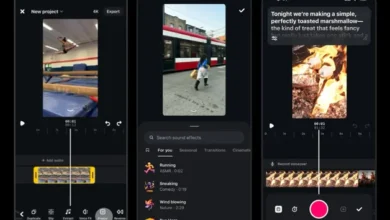
Also interesting: Meta says that almost 10% of all Reels viewed on Instagram and Facebook are now being created in Edits, its separate video editing app, a 3x increase quarter-over-quarter.
Edits is becoming an increasingly handy tool for content creators, and the data underlines the value that it provides for video creators, as Meta continues to add more and more features and options to the app.
Worth checking it out if you haven’t already.
Some interesting notes on the future vision of the company, and what Zuckerberg sees as the future of Facebook and Instagram, in particular.
Source link