
Meta shared some insights into the usage of its Muse AI agents in its Q3 earnings report this week, including data on adoption and growth strategy.
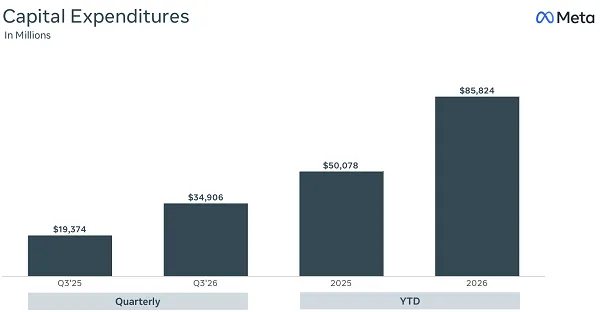
Muse is Meta’s big hope for deriving revenue from its massive AI infrastructure spend. Which is an increasing focus, as the company’s expenses continue to rise, with relatively little income as yet from its AI investments.
On its Q3 earnings call, Meta CEO Mark Zuckerberg said Muse has been downloaded more than 10 million times since it launched to users in the U.S. and Canada last month, highlighting significant consumer interest in the tool.
As per Zuckerberg: “Growth continues to be strong and we have been #1 in the App Store almost every day. Engagement and retention are also off to a strong start. About 25% of people who have set up Muse use it on any given day.”
Third-party reports support this, though according to data insights provided by Sensor Tower and shared @IntelFabs on X, user retention for Muse dips significantly two weeks after download.
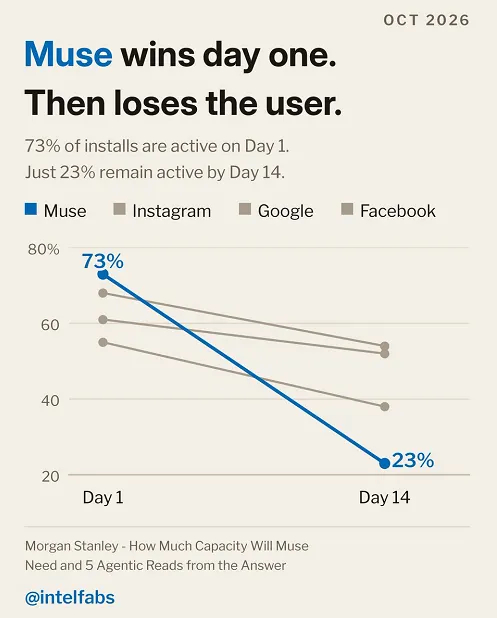
Other AI chatbots have seen similar retention trends over time, so Muse is not an outlier with its declining daily usage. But this also doesn’t bode well for an app that Meta is pinning so much of its AI hopes on, especially as the company continues to invest hundreds of billions of dollars into AI development.
Zuckerberg said that the most common use case for Muse is shopping, with more than 25% of Muse users asking for help finding better deals and making purchases. Zuckerberg also said that the average purchase size through Muse is more than $200.
“Plaid told us they hadn’t seen activity like they’re seeing with their connector on any other service before,” Zuckerberg said. “And in the first week we had to work with Stripe to raise credit limits since the volumes were above what any of us expected.”
This is probably a key use case that Meta wants to drive with the platform, so that it can take a percentage of sales facilitated in the app and then provide a pathway to profitability for its AI projects.
Though again, with potentially $1 trillion cumulatively invested into its AI push, the company has a long path ahead of it.
Zuckerberg added that Meta is working on a new “Muse Confidential VM” to address privacy concerns in the app, which continue to pose a challenge as the company faces more breaches.
Just this week, a New Mexico judge ordered the company to pay $25 billion in fines after a jury found that Meta had misled consumers about their data privacy.
More specific to Muse, Ars Technica reported this week that a cybersecurity group was able to obtain reams of information on Muse user queries through simple exploration techniques.
Privacy and security concerns still seem to be significant impediments to broad-scale adoption of Meta’s AI agent, which Zuckerberg said he hopes to scale to billions of users.
Zuckerberg also discussed plans for the creation of a large-scale Muse network, which would see Muse agents engaging with each other to share notes on how to optimize tasks.
As per Zuckerberg: “And then beyond that, building what I refer to as the Muse network, which is making it so that Muse is not just a kind of single-player game where you have your Muse, but making it so that your Muses can work with your friends and your families. And if you want to buy something, it’s not just navigating to that business’ website. It’s talking to their agent. I think that getting that all to work well together is going to unlock tremendous value at scale.”
Meta previously discussed unleashing millions of AI bots posing as users in its apps. Its Muse networks plan sounds similar, though these agents would be designed to share relevant optimizations to help drive efficiency for users.
Finally, Zuckerberg said that Muse is coming to Meta glasses in November.
Source link