

In 2018, Emma Gannon published The Multi-Hyphen Method. The writer-podcaster-author made the case for careers similar to her own: multi-faceted, multi-dimensional, multi-hyphenated. She wrote for the people she calls “career misfits”, and said: “For years I was told I was indecisive and scatty. In reality, I just thrive when I have multiple projects on the go.”
Eight years on, it feels like more people are multi-hyphenates than aren’t. Whether it’s DJ-fashion designer-broadcaster or rapper-entrepreneur-content creator, more and more people are refusing to be tied down to one career path. And to be fair to them, there’s plenty to like. You get to set your own schedule, have the freedom to experiment and no one puts you in a box.
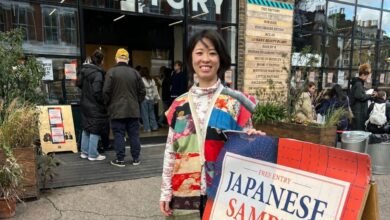
LOTI’s own co-founder and self-described “workaholic” Jules is the perfect example of a multi-hyphenate, balancing her career in food and beverage development on top of her work here. “They say that if you love what you do, you’ll never work a day in your life. In my experience, it’s more that you never get a day off.”
For Jules, spinning multiple plates has been a way to channel her ADHD, but it can still be a challenge to maintain a balance. “It helps that they’re all in the same kitchen: everything I do centres around hospitality, so one role tends to feed the next. Whether I’ve actually found a balance is another question. There’s always room for one more plate.”
The rise of Girlboss feminism created a pressure for women to “have it all” – a social life, a career, a creative outlet and a family. However, the reality is that this “all” is ultimately incompatible with the traditional singular career path.
Rebecca Dickson is the founder of Women Will Create, a community supporting female small business owners. Her job title isn’t limited to ‘founder’, she’s also a small business advocate, a market curator, a community owner, a confidence coach, a public speaker, a charity worker and a mother. Try fitting all of that on a CV. The multi-hyphenate path wasn’t one she’d planned. “I was in a corporate job I hated, so I started working on a community to support women and talk about stuff I loved,” she says. “This turned into many things along the way and gave me lots of hats to wear.”
She sees the same pattern in the women she works with: “I see a lot of multi-hyphenates in the women I work with, whether they call themselves that or not. It makes sense there’s a juggle when someone may own their own business, or if they have a family. For me I had been doing all of this before becoming a mother but it has definitely had its advantages when it comes to the times I can work, so I can be present with my son.”


While the “multi-hyphenate career” started as a choice, we’re seeing that for more and more people, it’s become a necessity. Nowhere is this clearer than in media. The traditional landscape is becoming increasingly fractured, the world is shifting from print to social and AI is circling our jobs, so you cannot afford to be just one thing anymore. You need to be a writer, a photographer, a videographer, with the ability to create a longform piece, snappy social captions and engaging TikTok content to go with it. The list of required skills keeps growing, while the budgets keep shrinking. The result? If you fall behind, you’re out.
Jules says: “Journalists rinsed the golden days of big advertising budgets, then along came social media and shrinking attention spans. Now publications are struggling to make money, so what used to be a newspaper or magazine is also an events company, a product range, branded package holidays and whatever else might keep the lights on. But multiple revenue streams aren’t the same as more profit. Often, you’re spending more to do more, and wages are the thing that suffers.”
This has created a pressure cooker. Everyone suddenly needs a Substack, a TikTok page, a “personal brand.” In 2022, a clip went viral of Molly-Mae Hague telling The Diary of a CEO podcast that Beyoncé has the same 24 hours in a day that we do. She was implying that with a bit of hard work, we all should be able to be an international singer, songwriter, actress, and businesswoman. A Beyoncé-level one at that. Hague has since admitted her mistake, but the mindset has stuck. Social media has only spurred it on, and we’re now told everything in our lives needs to be completely optimised – our time, our skills, our diet – to the point where something that started as liberating becomes confining.
Even the celebs can’t sit still. Billie Eilish is set to make her film debut in the upcoming adaptation of The Bell Jar and Dua Lipa started a media brand and book club, all while actors are becoming beauty entrepreneurs and footballers are podcasters (then again, everyone is a podcaster these days).
The problem with something becoming the norm is that it gets very hard to opt out. With no fixed structure and limitless paths to follow, it’s hard to know when you’re “on” and when you’re “off”. Kyle Raymond Fitzpatrick, writing about the rise of the wedding industrial complex, puts it well: “Funny how everything became work. Even love!”
And it isn’t just people. Businesses can’t seem to be happy as just a clothes shop, hotel or restaurant anymore. Everyone wants to be a “lifestyle brand”. The key to that? Food and beverage, apparently.
The big brands all do it. Ralph Lauren launched Ralph’s Coffee in its Fifth Avenue store in 2014, and since then the likes of Carhartt, Arket and Uniqlo have all sold cappuccinos alongside coats. We have to admit, visiting the old Oxford Street Topshop with its braiding bar, nail techs, coffee kiosks and DJs was a pretty wondrous experience. But the motive is clear: these brands want to be more than places that sell clothes. In a world where everything can be a product, they want to be THE product. Somewhere along the way, staying in your lane started to look like a lack of ambition.
But just as the multi-hyphenate career started as a choice and has since become a necessity, for smaller businesses, branching out has become a matter of survival. At New Acres in Wandsworth, a new-build development with 36 small businesses, the units range from a vintage shop to a yoga studio. The thing they nearly all have in common? A coffee machine. You can see why. With “death of the high street” ringing in every independent’s ears, coffee is a good way to make extra revenue and build regulars, especially in downtimes for the businesses.


Restaurants are at it too. We were slightly perplexed by the news that the former Hakkasan Hanway Place is becoming what’s billed as London’s first “Urban Culture Dining Club”, which translates as a southern French restaurant, cocktail bar, live music venue and recording studio all under one roof. At a time when running a restaurant is harder than ever we admire the creativity, but is trying to be everything at once really the answer?
It’s not just the big players either. Kaana, the incredible salad/bowl bar, is launching a supper club this month, and while we’re not convinced a salad bar supper club makes total sense, we’d happily be proved wrong (and we hope we are!).
Then there’s the revamped Virgin Active on North Row, which the brand bills as its first “social wellness club” in the UK. It’s a gym and an office and a Muay Thai studio and a sauna and a café, so you can take your 10am call between sets and skip the commute. In many ways it’s multi-hyphenate final boss: a business that refuses to be one thing, built for the people who want to do everything.
Being multi-hyphenate can be fun and freeing, and for a lot of people it’s simply necessary. We’re certainly not blaming the vintage shop with an espresso machine trying to make rent, and we’re hardly in a position to judge, given that we’re writing this as a media brand with an events calendar. But when everyone does partnerships, everyone does events and everyone does coffee, it all starts to blur into one big ball of mush.
Doing one thing well used to be the bare minimum, but now it’s a luxury, reserved for those who can afford to turn down the coffee machine. We’d love to see a London where a person can do one thing, a brand can be one thing, and both can thrive. Until then, we’ll be over here, adding one more plate. Maybe one day, enough will be enough.
Featured image by Nick Fewings on Unsplash