
For most of the nineties, my wardrobe was black (with the occasional navy so dark that it might as well have been black). Since then, I’ve been on a mission to bring more color into my life. One of the most stunning pieces of product design I’ve come across is the Tex-Lock ($169), a cloth-covered bicycle lock designed by art students in Leipzig. It’s theft-proof: saw blades get ensnared in the fabric covering, and clippers can’t cut through the fibres. The lock comes in bright orange and looks good looped around your neck during transit.
Anticipating the colder weather about to descend on New York, you might check out the Dutch furnishing brand Suite702’s reinvention of the hot-water bottle ($62). The unique rounded-rectangle shape, with bold colors and racing stripes, may just make you want to hibernate. But, if you decide to brave the elements, keep in mind the German proverb “There is no such thing as bad weather, only bad clothing.” Lloyd’s made-to-order Canadian-fleece toque with a massive brim ($62) will make you feel invincible. My favorite colors are red and “epoca” blue. To fill in awkward silences at holiday cocktail parties, the San Francisco artist Tucker Nichols created a set of hand-lettered napkins ($36), printed in pink and red, on linen, with suggested topics of conversation: “Where birds go in big storms,” “fear of escalators,” “smog v. fog.” As a companion piece, he designed subjects to avoid: “Root Canals,” “When was the last time you wore that sweater,” “Cloth diapers.” I was happy to discover that Karel Martens also collaborated, with Suite702, on a series of modernist towels with bold stripes and blocks of color ($28-$229), inspired by the colors on the beach in Le Havre, France. On the other side of the Channel, in Cornwall, the illustrator Tabby Booth designed the Odessa throw ($250), for Slowdown Studio, depicting a mermaid staring at a red fish. It’s remarkably primitive, and powerful.
For the Home
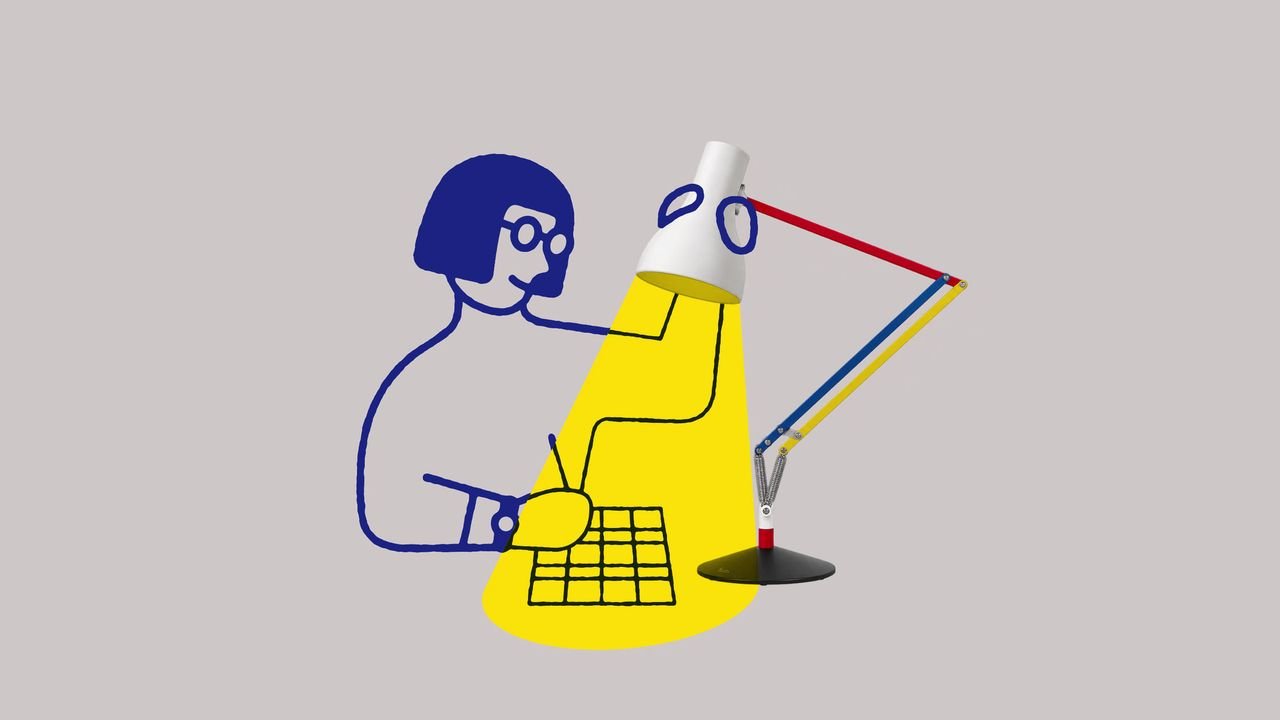
To draw, I need a really good light. Anglepoise invented the now ubiquitous and widely imitated adjustable-spring desk lamp in the nineteen-thirties. Paul Smith refreshed the design by introducing primary colors to the steel arms of the Type 75 Mini Desk Lamp ($370). This simple design move transforms an understated lamp into a fun object. Another great use of color can be found in the Dutch coffee-brewing machines made by Moccamaster ($369). Designed in the nineteen-sixties to bring high-quality brewing to Scandinavian homes, the red, orange, yellow, and green machines are surely intended as an antidote to the monochromatic, dark Nordic winters. They remind me of the colorful houses often seen in traditional Scandinavian towns. For those who drink tea, the Japanese enamel kettle Noda Horo ($41), with its simple forms and bright colors, is another design classic. If you want to make this gift more special, pair it with Taiwanese tea ($8-$46) from Té Company, a shop in the West Village. Florentine sells an affordable designer butter knife ($35) engraved with an abstract illustration by Oded Webman, which transforms a mundane kitchen utensil into a small work of art. Its dull edge and playful motif make it suitable for children. The Kiridashi knife ($128), sold through Best Made, looks more dangerous. Unlike a jackknife, it has a penlike cap (also known as a scabbard cap). Made of steel, iron, and magnolia wood, the knife has an elemental quality, and adheres to Rams’s principle “Good design is as little design as possible.”
Where to Put It All
Source link