
Such tactics dovetail with the Administration’s wider political objectives abroad, from establishing white victimhood to bolstering Israel and fighting the perceived weakening of Judeo-Christian values. Last year, at the Munich Security Conference, Vice-President J. D. Vance shocked Europeans by warning that the biggest danger to the Continent was not Russia or China but “the threat from within.” Soon after, Samuel Samson, a twenty-seven-year-old Deputy Assistant Secretary of State, expanded on the Vance doctrine in a manifesto, published on the State Department’s Substack account, titled “The Need for Civilizational Allies in Europe.” Across Europe, he wrote, “a decadent governing class afraid of its own people” was waging “an aggressive campaign against Western civilization itself.” Further evidence of the Administration’s attitude toward the Continent surfaced in a private Signal chat that had been formed just before the U.S. launched strikes against the Houthis in Yemen. Vance wrote, “I just hate bailing Europe out again.” Defense Secretary Pete Hegseth found time to chime in: “VP: I fully share your loathing of European free-loading. It’s PATHETIC.” In the Trumpian mind, Europe is to the world as Manhattan is to America—an irksomely glamorous den of effeteness and decay.
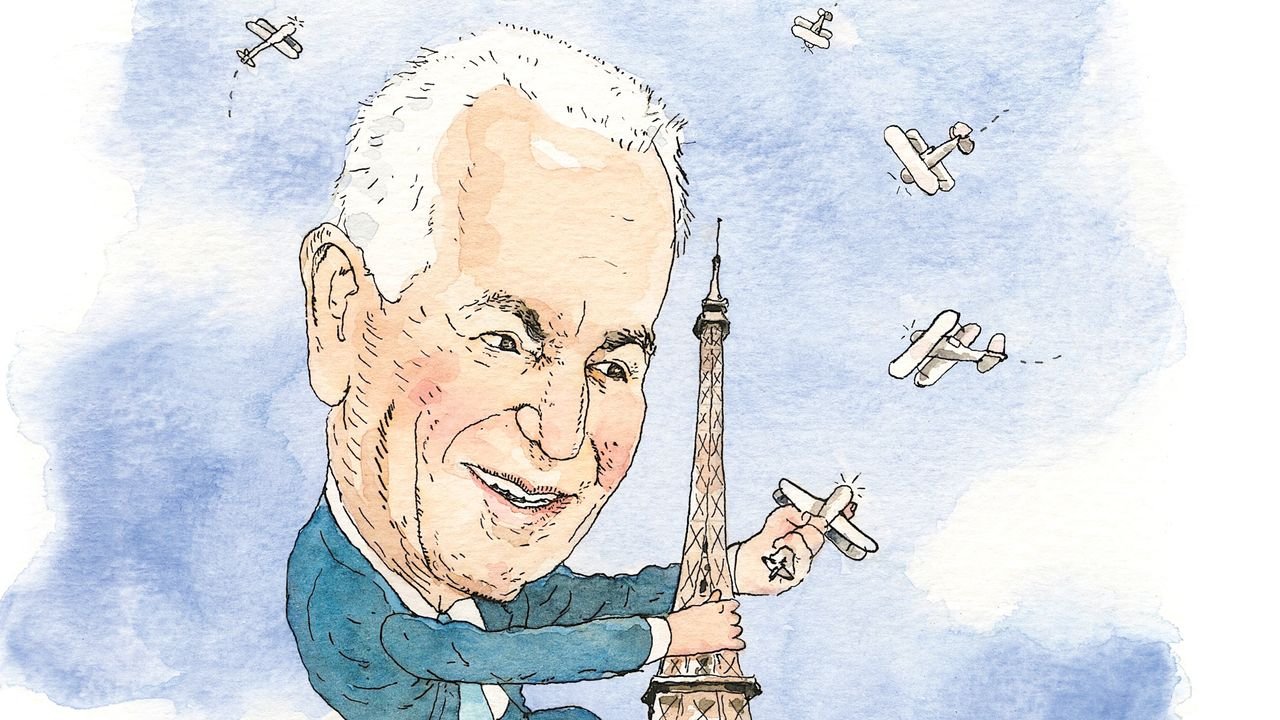
Compared with Vance’s and Hegseth’s grudges, though, Kushner’s concerns about the Continent run deep. Less than a century ago, the Kushners were Europeans, too. Over the summer, he reportedly urged Trump to extend refugee status to French Jews, even as the White House was stripping Temporary Protected Status from hundreds of thousands of Haitian immigrants who’d fled catastrophe in their home country. The guest at the dîner mondain recalled Kushner remarking, with tears in his eyes, “The reason I’m here talking to you tonight is that my parents got wise enough to move to the United States.”
Among U.S. Ambassadors to France, domestic pot-stirring is not unprecedented. Charles Rivkin, an Obama appointee, wrote, in a leaked classified cable from 2010, that he intended to hammer France on the theme of “minority rights” and to challenge officials on “sacred cows” of French thought, such as the idea that universalism transcends ethnic and racial identities. What is different now is the scale, the stamina, and the straightforward ruthlessness of American obtrusions, and a sense that, as the transatlantic alliance deteriorates, the Trump Administration has made France a laboratory of interference.
Last year, for instance, soon after Kushner’s confirmation, Pierre Haski, the president of Reporters Without Borders, received an unusual visit, orchestrated by the American Embassy, from two State Department representatives. One of them, it turned out, was Samuel Samson, the author of the “Civilizational Allies” manifesto. The pair handed Haski business cards, emblazoned with golden eagles, and then started interrogating him about press freedom. The men cited, as the basis for their concern, the treatment of the far-right leader Marine Le Pen, who earlier that year had been found guilty of embezzling millions of euros in E.U. public funds to finance her political party, Rassemblement National (R.N.). According to Le Monde, the pair characterized her conviction as an authoritarian crackdown, and compared France to North Korea. Haski told me, “It was one of the most bizarre encounters I’ve ever had.”

“Would you like me to summarize this discussion?”
Cartoon by Dimitra Rizou
France is the European Union’s only nuclear power and its only permanent member of the U.N. Security Council. It is also home to the Continent’s largest Jewish and Muslim populations. Magali Lafourcade, the magistrate who heads the National Commission on Human Rights, told me that this makes France “the best country to attack in order to attack Europe.” Lafourcade had had her own off-putting encounter with the same duo who visited Haski. Again, the men’s questions focussed obsessively on Le Pen and her legal troubles. “They were very courteous and at the same time very intimidating,” Lafourcade recalled. The meeting left her alarmed enough that she reported it to the Ministry of Foreign Affairs. She said, “I even went out to smoke a cigarette, and I don’t smoke—I felt so uneasy.” The incident preceded Kushner’s arrival in Paris, but it struck Lafourcade as a fitting prelude to his controversial public statements. The Administration’s tactics have reminded her of recent malicious acts in France tied to Russian operatives, such as the defacing of a Holocaust memorial with bloody handprints and the planting of a pig’s head outside a mosque. “It’s all to increase division and polarization,” she observed. (After Lafourcade discussed her encounter on television, her X account was suspended. She told me, “I perceive this as retaliation and a restriction of my freedom of expression.”)
Source link